other Venezuelans in the World Coins . Sucre and other Venezuelans in the world currency. (Draft dated 10/01/2007, will soon include pictures of the parts and details more precise)
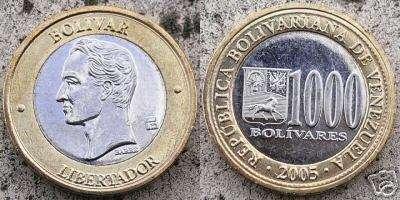
The image of our freedom and has been honored in the currencies of 12 countries namely; Bolivia, Cuba, Emirate of Sharjat, Bahamas, Panama, Colombia, Cook Islands, Spain, Hungary, Sahrawi Arab Republic, Ecuador and Venezuela, which places the Venezuelan Simón Bolívar more universal in the global coin.
However, the merits of other Venezuelans have been recognized in the world's currencies, with the Antonio José de Sucre Comans the second Venezuelan with more presence in numismatics.
Sucre in the currencies of the world.
Bolivia:
In August 1826, the Gran Mariscal de Ayacucho Antonio José de Sucre, President of the newly founded Republic Bolivar (now Bolivia), from the capital city of Sucre (Chuquisaca and oldest old Charcas), gave to execute new emission standards presiding country's currency.
coins minted by the mint of Potosi, which would replace the coins minted during the colonial period from 1827 carried the image of the Liberator Simón Bolívar in military uniforms and singing their captions "SUCRE AYACUCHO 1824 ".
These rules were applied to pieces of 8 and 4 Soles (or salaries) from 1827 to 1845.
I imagine that "an excess of living heroes" was used only the image of Bolívar in the currencies of the emerging republic, but also think that Sucre is present in them to show your name on them and allusion to the battle of Ayacucho in 1824 Missing with the old English empire in South America.
Ecuador:
Bolivarian This country named its national currency in 1886 with the name of Sucre and used his image in the same until 2002 when he decided to adopt the dollar as the United States currency. During this period, including pieces were coined "unusual" as a Bimetallic in 1997 with the bust of Antonio José de Sucre.
Spain:
in 1990 to commemorate the imminent 500th anniversary of the "Encounter of Two Worlds" Spain issued a silver coin of 10,000 pesetas known as the "cincuentín "more than 50 mm, which gave the" Conquistadores and Libertadores y en la cual incluyó la imagen y el nombre de Sucre. Evidentemente como Sucre no fue ningún conquistador, aparece entonces en dicha moneda en calidad de “Libertador” lo cual es un reconocimiento oficial del Reino de España a la importancia de este venezolano gracias a cuya lucha fue borrado del sur de América el Imperio Español.
Colombia:
Tenemos conociendo de que la Republica de Colombia acuñó una moneda de plata con la efigie del Gran Mariscal Sucre. Próximamente les indicaremos mas datos al respecto.
Venezuela:
Venezuela issued in 1980, on the occasion of the Sesquicentennial of the Death of Gran Mariscal de Ayacucho, the first coin with a double image of Sucre. The obverse figure Sucre in military uniform and the reverse appears the representation of his assassination in Berruecos. The coin is silver and is the only currency of 75 of our history Bs.
Later in 1995 for the Bicentennial of the Birth of Antonio José de Sucre BCV issued two coins, a silver Bs Bs 500 and 5,000 in Gold
Miranda in English Currency:
in 1990 to commemorate the imminent 500th anniversary of the "Encounter of Two Worlds" Spain issued a silver coin of 10,000 pesetas known with the name "cincuentín" over 50 mm, which is dedicated to the "Conquerors and Liberators" and which included the image and the name of Miranda, which recognizes the greatness of the precursor of independence American who died in prison of "The Roller" in English territory accused of crimes against the English colonial state.
Joaquin Paris in Colombian currency:
Colombia in 1969 commemorating the Sesquicentennial of the Battle of Boyacá determined the independence of New Granada, with the minting of five gold coins. In our Liberator obverse and the reverse each of the five commanders of battalions independence. Four of the five commanders were Venezuelans, including General Joaquin Paris immortalized in the currency of 100 Pesos Oro
Data: Quality: Proof, Weight: 4.3 Grams of Gold, Law: 900, Modulo: 20 mm.
Krause Catalog: KM 238
Soublette in Colombian currency:
Colombia in 1969 commemorating the Sesquicentennial of the Battle of Boyacá determined the independence of New Granada, by the minting of five gold coins. In our Liberator obverse and the reverse each of the five commanders battalions independence. Four of the five commanders were Venezuelans, including General Soublette immortalized in the currency of 200 Pesos Oro
Anzoátegui in Colombian currency:
In 1969 Colombia celebrated the Sesquicentennial of the Battle of Boyacá determined the independence of New Granada, by the minting of five gold coins. In our Liberator obverse and the reverse each of the five commanders of battalions independence. Four of the five commanders were Venezuelan including General José Antonio Anzoátegui immortalized in the currency of 300 Pesos Oro
Rondon in Colombian currency:
Colombia in 1969 commemorating the Sesquicentennial Battle of Boyacá determined the independence of New Granada, by the minting of five gold coins. In our Liberator obverse and the reverse each of the five commanders of battalions independence. Four of the five commanders were Venezuelans, including General Rondon immortalized in the currency of 500 Pesos Oro
There are also other Venezuelans to merit more than enough to be honored in the currencies of countries which have done work with countries that magnified in which they settled:
Upon separation from Gran Colombia in 1830 by José Antonio Páez actions, had three new republics which were presided over by three Venezuelan military and political to merit more than enough to be recognized the currencies of the countries who presided:
José Ignacio Flores, 1st constitutional President of the Republic of Ecuador from 1830 to 18XX.
Rafael Urdaneta, Maracucho, last president of Gran Colombia in 1830. funny thing is that no maracucho has been president of Venezuela.
Andrés Bello in Chile. El Maestro del Libertador, Ambassador de La Gran Colombia to the British Empire and writer of the First Americans Grammar, merit more than enough to appear on English coins after American independence was based in Chile, where he was the most important positions country except the president. However, Andrés Bello was Constituent Senator (check it presided), Court Judge, President and Founder of the University of Chile and for decades the most influential man in that country.
Jose Antonio Paez
in Argentina. A little-known stage in the life of Paez, was his participation in the Army of the United Provinces of La Plata (Argentina today), where he was recognized as "the Argentine Army Brigadier General" and a place in his honor at Chacarita, in Greater Buenos Aires. Sucre
the Bolivarian Medallística. Antonio Jose de Sucre in Peru
Luis Brion in the Netherlands Antilles.